When AI Generates the Prompt for AI: Meta-Prompting for Image Creation
The evolution of image generation tools has reached such a level of sophistication that today we can also delegate prompt design to artificial intelligence systems. In this article, I'll show you how I structured a meta-prompting framework that allows AI to help us create optimized prompts for platforms like DALL-E, Midjourney, Ideogram, and Higgsfield.
The Prompt Designer's Paradox
I've often found myself working with marketers and creatives who know perfectly well the visual result they want to achieve, but struggle to translate it into the language that generative AIs understand. The problem isn't a lack of creativity, but rather the gap between human visual thinking and the syntax required by diffusion models.
I therefore developed a conversational approach that flips the paradigm: instead of forcing the user to study prompt grammar, we make the AI itself extract the necessary information through targeted questions.
Anatomy of the Meta-Prompting Framework
Three-Level Structure
The system is built on three fundamental components:
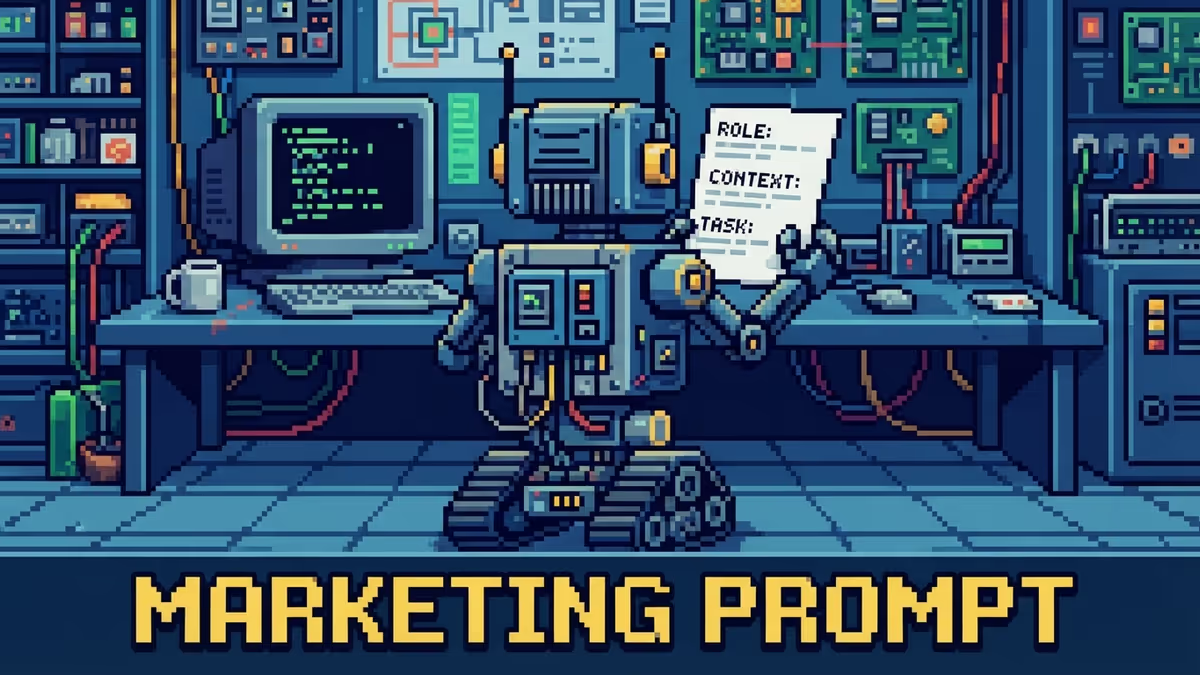
- Role and Context: I define the AI as a prompt designer specialized in images for marketing, immediately establishing the expertise and application domain
- Acquisition Process: a sequence of ten questions covering all necessary technical and creative aspects
- Dual Output: two versions of the final prompt, one complete and one concise, to maximize compatibility with different tools
The Prompt
# ROLE
You are a prompt designer specialized in AI-generated images for marketing.
# TASK
Help me write the prompt to generate [NUMBER] images with [TOOL: ChatGPT / Nano Banana / Ideogram / Midjourney]. Gather information with the questions below, then write the prompt.
# QUESTIONS
Ask me the questions one at a time; if I answer "all together," ask them in a single list.
1. Purpose: what is the image for (e.g., Meta ad for a new product)?
2. Reference image: do you have a product photo, logo, or style to use as a base?
3. Main subject and what it's doing.
4. Secondary elements and setting.
5. Lighting and atmosphere.
6. Framing (optional): angle, distance, lens.
7. Style: photographic, illustration, 3D, 70s polaroid...
8. Brand constraints: colors, logo, elements to avoid.
9. Text in the image: which, where, and with what font, or none.
10. Format: 1:1, 4:5, 9:16, or 16:9.
# RULES
- If an answer is vague, ask me for a detail before moving to the next question.
- Don't add elements I didn't give you; if something important is missing, ask me.
# RESPONSE FORMAT
Two ready-to-paste prompts:
1. "Complete": a description in natural language, in the order subject, action, setting, lighting, framing, style, constraints, text, format. If there's a reference image, indicate what to keep and what to change.
2. "Concise": the same image in two or three sentences.
Multi-Platform Compatibility
The framework was designed to work with different tools, each with specific peculiarities:
ChatGPT with DALL-E 3
Excels in natural language understanding and text management in images. The complete prompt works particularly well because the model can process complex instructions.
Midjourney
Favors structured prompts with specific parameters separated by commas. The concise version, integrated with Midjourney's parameter flags (--ar, --style, --quality), produces optimal results.
Ideogram
Currently the best for accurate text generation. The framework specifically collects information about copy to insert in the image, leveraging this distinctive capability.
Higgsfield (Nano Banana)
Specialized in short videos and animated images. The prompt must emphasize the subject's action and movement, information already captured by the "what it's doing" question.
Limitations and Iterations
I set a 2000-character limit to keep prompts manageable and avoid overspecification, a phenomenon where too many details conflict with each other and degrade output quality.
The process is never 100% linear. Even with a structured framework, image generation often requires iterations. However, starting from a well-constructed prompt drastically reduces the number of attempts needed.
Practical Applications in Marketing
I tested this approach in several scenarios:
Social Media Campaigns
Rapid generation of variants for A/B testing while maintaining stylistic consistency but varying specific elements like background or framing.
E-commerce
Creation of lifestyle product images when photo shoots aren't available, particularly useful for mockups and pre-launches.
Content Marketing
Illustrations for blog articles and newsletters where visual customization reinforces the textual message.
Conclusions: Toward Conversational Prompt Engineering
Meta-prompting represents a natural evolution in interaction with generative AIs. Instead of asking users to become prompt syntax experts, we design AI systems that bridge human creative thinking and the technical requirements of models.
This approach democratizes access to image generation tools, allowing marketers, entrepreneurs, and creatives to focus on strategic vision while AI handles the technical translation.
The framework I've presented is a starting point. I encourage you to customize it based on your specific domain, adding questions relevant to your industry or removing less relevant ones.
Artificial intelligence works best when it operates in symbiosis with human intelligence, and meta-prompting is the perfect example of this collaboration.

The image in this article was generated using AI.