Claude Dispatch: When AI "Does Things" on Your Computer, in Your Place!
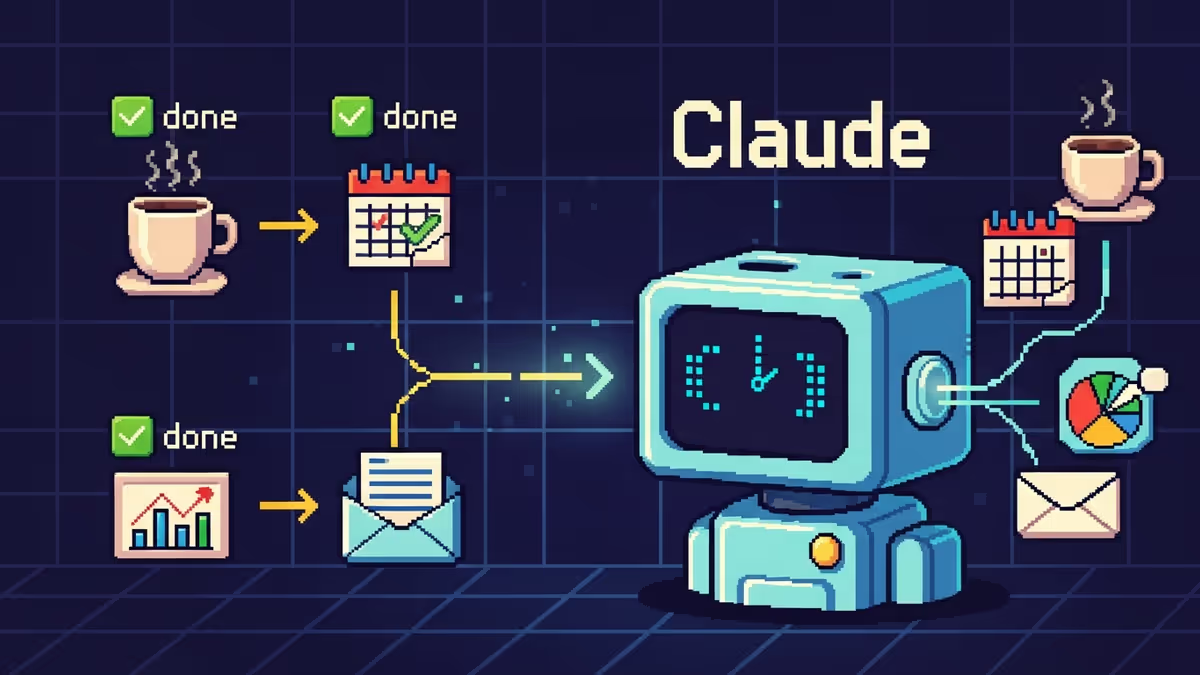
We had already seen it with OpenCLaw (and more generally with all the "claw" systems born afterwards), but today Anthropic makes accessible to everyone a new way of interacting with artificial intelligence. We're no longer talking about a chatbot that answers our questions, but an assistant that acts autonomously while we're elsewhere.
Claude Dispatch, as the new feature launched by the Amodei siblings is called, represents a conceptual leap: AI no longer passively waits for our commands, but operates on our behalf.
The Remote Control Breakthrough
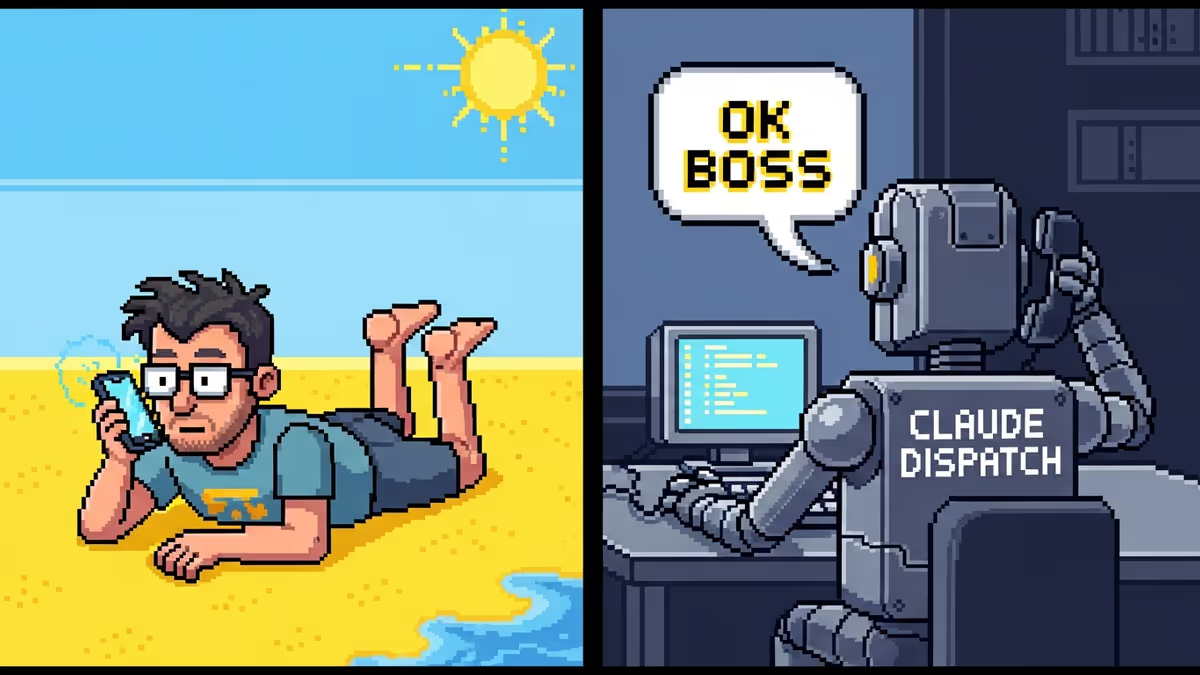
Think about how many times we've wished we could start a complex process while on the move. With Dispatch, this possibility becomes concrete reality. I can be on a train, take out my smartphone, and ask Claude to execute a build on my computer at home or in the office. The AI doesn't just receive the instruction: it executes it, monitors the process, and notifies me when it has completed the work or when it needs my decision.
This capability raises fascinating questions about delegation. To what extent are we willing to trust an automated system for critical operations? Anthropic's answer is architected on a system of graduated permissions: Claude asks for authorization before accessing new applications, and we can interrupt the operation at any time.
Computer Use: The AI That Navigates Our Desktop
The Computer Use functionality takes this philosophy even further. Claude can literally use our computer, controlling browser and screen when specialized tools aren't enough. It's an evolution that makes me reflect on the very concept of interface.
Historically, we've always designed interfaces with the human user in mind. Now we're entering an era where AI needs to interact with systems designed for us, creating an interesting technological short-circuit. Claude prioritizes more precise tools, typically the command line and specific connectors, resorting to direct screen control only when necessary.
The choice to require macOS for this functionality reveals something important: we're still in the early stages of this revolution. Technical limitations exist, and Anthropic is transparent in defining these features as "research previews." Not everything works perfectly on the first attempt, and this honesty is valuable.
Channels: The Ubiquity of Assistance
With channels, Claude integrates into our daily communication platforms. iMessage, Telegram, Discord: the AI becomes reachable where we already communicate, without forcing us to change habits. This design choice demonstrates deep understanding of human behavior. We don't have to adapt to AI, it's the AI that inserts itself into our existing flows.
The ability to start a session from terminal and resume it from web or mobile introduces a concept of continuity reminiscent of the Apple ecosystem, but applied to artificial intelligence. Work is not tied to a specific device, but becomes fluid across different contexts.
Automated Recurrence: /loop
The /loop command deserves separate analysis. It allows scheduling recurring tasks: a morning review of pull requests, a nightly test suite. We're talking about intelligent automation, not simple scripts. Claude interprets context, adapts its actions, learns from previous iterations.
This functionality raises interesting questions about supervision. If Claude executes tasks while we sleep, what level of decision-making autonomy are we granting it? The prompt injection protections integrated into the system are fundamental, but represent only one aspect of overall security.
Practical Implications
Anthropic is explicit about a crucial requirement: the computer must remain on. It seems trivial, but reveals the hybrid nature of this solution. We're not talking about pure cloud, but an intelligence that lives between our local devices and remote infrastructure. This architecture has implications for privacy, security, energy consumption.
The availability on Pro and Max plans for Computer Use and Dispatch, while channels are accessible on all paid plans, traces a hierarchy of functionality that reflects technical complexity and usage potential. It's a pricing strategy that recognizes different levels of professional need.
Final Reflections
Claude Dispatch represents a significant evolution in the human-machine relationship. We're no longer talking about passive tools awaiting input, but proactive agents operating according to our generalized intentions. This change brings new responsibilities: we must learn to delegate effectively, to define clear boundaries, to supervise without stifling.
Anthropic's transparency in defining these functionalities as research previews is important. It reminds us that we're exploring new territories together, that perfection is not guaranteed, that learning is bidirectional. AI learns from our interactions as much as we learn to collaborate with it.
What emerges is a future where artificial intelligence doesn't replace human work, but amplifies its temporal and spatial possibilities. I can be present in multiple contexts simultaneously, delegating execution while maintaining strategic supervision. It's a powerful vision that requires technological maturity and ethical awareness to be fully realized.
The journey has just begun, and Dispatch is a significant step along this path.